 Click Here to View Your Vacation
Heart of Normandy


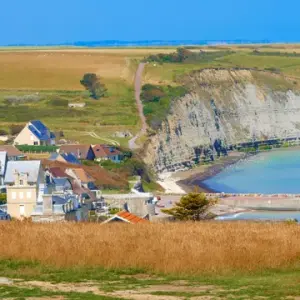


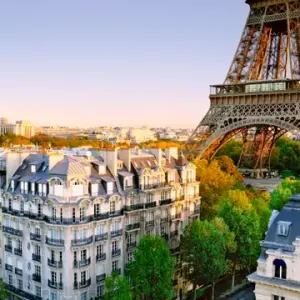


Dock in the heart of Paris—with views of the Eiffel Tower from your ship—and unveil Normandy’s rich history as you sail along the Seine River. In Paris, view timeless masterpieces at the Louvre, including the enigmatic Mona Lisa. In Vernon, explore Claude Monet’s enchanting Giverny gardens. From the Gothic splendor of Rouen to the history-laden beaches of Normandy, this voyage reveals the iconic landmarks and rural charm found along this renowned waterway.
Why book with AAA Travel?
- Our expert travel advisors are some of the best in the industry - and they truly love to travel themselves! They are experienced, highly knowledgeable, and live right in your community.
- We are a not-for-profit member-service organization dedicated to helping our members explore the world!
- AAA works with a wide variety of top travel partners to offer exclusive member benefits including discounts, special inclusions, onboard spending credit and more.
Call to Book
1-800-829-5448
Included With Your Trip
- 7 nights in a river-view stateroom
- All onboard meals featuring regional specialties and always available American classics
- Complimentary beer, wine and soft drinks with onboard lunch and dinner
- 6 guided tours
- Visits to UNESCO World Heritage Sites
- Culture Curriculum®: Enrichment lectures and Destination performances
- Welcome cocktails and Farewell dinner
- 24-hour specialty coffees, teas and bottled water
- Port taxes & fees
- Complimentary Wi-Fi
- AAA Benefit: $100 per person shipboard credit
Additional Information
Day 1 - Paris, France
Embark your ship and settle into your stateroom. Long a hub of French culture and cuisine, Paris is one of the most romantic destinations in the world. Over the centuries, Parisian culture has been built on the wings of inspiration. Music, film, architecture, literature, dance and the visual arts all have their brilliant place in the museums, theaters, bookstores and remarkably preserved buildings of this magnificent city. At the center of it all is the Champs-Élysées. With its inviting riverside promenade, graceful bridges and splendid views of all things Parisian, from the Eiffel Tower to the Louvre Museum.
Day 2 - Paris, France
One of the most pleasurable activities in Paris is whiling away the time in one of the city’s outdoor cafés. Whether you are sipping a café au lait or a kir royal, there is no better way to feel like a Parisian. The hub of social and culinary life, cafés have been part of the city’s fabric since the 1600s. During the 20th century, literary and artistic figures—such as Ernest Hemingway, Colette and Pablo Picasso—famously met over drinks to share their works and ideas. Today, thousands of cafés line the pavements and squares to connect with France’s culture and history.
Day 3 - La Roche-Guyon, France and Vernon, France
The picturesque village of La Roche-Guyon lies within the verdant Vexin Français Regional Nature Park, bound between the meandering Seine River and a striking wall of white chalk. This idyllic setting is home to a number of historic monuments, including a 15th-century church dedicated to St. Samson; a 16th-century salt store; a public fountain presented to the village in 1742; and the town hall, inaugurated in 1847. The beguiling 12th-century Château de La Roche-Guyon, however, is undoubtedly the village’s most emblematic landmark, once capturing the attention of poet Victor Hugo, impressionist Claude Monet and composer Joseph Kosma, among many others. The castle and its breathtaking surroundings still mesmerize all who visit it.
Vernon is a charming provincial town. Its cobblestone streets are reminiscent of the Middle Ages, and some of its half-timbered houses feature magnificent wooden carvings. The town was founded by the Viking Rollo in the 9th century, where an island in the Seine made for easy crossings. Because of its importance as a transit point between Paris and Rouen, the town was well fortified and frequently besieged. Ruins of its old medieval bridge still linger on the Seine’s right bank. The remains of La Château des Tourelles are the last surviving witness to that era.
Day 4 - Scenic Sailing on the Seine River and Rouen, France
The Seine meanders through the mellow vistas of Normandy. As it makes its sleepy and serpentine way to the English Channel, it winds along for 240 miles from Paris, more than doubling the distance of a crow’s flight. As you sail, swathes of fields unfurl toward groves of apple orchards, sources of the region’s famed Normandy cider. Calvados apple brandy is also a regional specialty, and a celebrated staple ingredient in Normandy cuisine. You will also gaze upon picturesque villages and historic abbeys on these bucolic banks.
Founded by Romans, Rouen is situated amid chalk cliffs along the Seine. The Norman capital boasts many pleasures, from the 700 charming half-timbered houses of the Old Town to the glorious Rouen Cathedral, which so captivated Claude Monet that he painted it many times in varying light. Until the 17th century, Rouen was the second-largest city in France. Today, it is the country’s fourth-largest port. The city is perhaps best known as the site of Joan of Arc’s last stand; the patron saint of France was tried and condemned here for heresy and burned at the stake in 1431.
Day 5 - Normandy Beaches, France
History focused its sights along the coast of Normandy, France—notably Omaha, Juno and Gold Beaches—on the early morning of June 6, 1944, as American, Canadian and British troops made landfall in their first European incursion during World War II. The entire operation was termed Operation Overlord, the code name for the invasion of Normandy. The remains of the concrete structures and steel causeway of Mulberry Harbor, built by the British, can still be seen on the beach near the village of Arromanches. The Arromanches Debarkment D-Day Museum presents animated 3D scale models to help visitors grasp this exceptional harbor and its contribution to the battle—considered perhaps the single greatest innovation that ensured victory for the Allies.
Day 6, Les Andelys, France
Les Andelys is best known for its imposing castle overlooking the city, the Château Gaillard. Built in 1196 by Richard the Lionheart, the castle and the village’s strategic location bolstered the importance of Les Andelys throughout the Middle Ages. The town also gained notice for its Sainte Clotilde Miraculous Spring, where the wife of the first Frankish king, Clovis, turned well water into wine to serve the builders of her Benedictine monastery. Europe’s devout, upon hearing of the act, flocked here on pilgrimages until the end of the 19th century.
Day 7 - Le Pecq and Paris, France
The origins of Paris can be traced back to a Gallic settlement founded during the 3rd century BC. By the time Napoleon III established the Second Empire during the mid-19th century, it had expanded into a large city and was in need of a major transformation. What transpired was a division of Paris into 20 arrondissements, starting at the Île de la Cité and spiraling out in a consecutive numerical order—the city’s present design. From the lively jazz bars of the Latin Quarter to the steep, ivy-clad streets of Montmartre, these charming districts are a delight to explore.
Life in Paris revolves around the Seine River, with 37 bridges crossing the river, each telling a story. Perhaps none are so extravagant as the Pont Alexandre III, a graceful span named for the Russian tsar who signed the Franco-Russian Alliance in 1892. Downriver, the five-arched Pont d’Iéna is beloved for its scenic location linking the Eiffel Tower to the Trocadéro district. The Pont des Arts, set between the Louvre and the Institut de France, was famed for its thousands of padlocks, attached by couples to the railing grate as a sign of their devotion to each other.
Day 8 - Paris France
Bid farewell to your fellow guests and journey home. Or spend more time exploring, perhaps joining one of our extensions.
Price My Trip
Product Code: AAA-VIKING
*Please see Viking Cruises brochure or website for deck plans, general information, cruise conditions and responsibility statement. AAA benefit applies to first two passengers in stateroom, are non-transferable, have no cash value if not used and may not be applied to purchase. Optional excursions, travel insurance and gratuities not included. Wi-Fi connection speed may vary. AAA Benefit: $100 per person shipboard credit for all Viking cruises 8-11 days. Shipboard credits can only be applied when booked directly by AAA Travel Agent. This offer is combinable with group rates, early booking discounts, past passenger discounts, refer a friend credits and future cruise vouchers. Offer is not combinable with interline and wholesale bookings or valid on other Viking products. Onboard credit has no cash value. Viking reserves the right to correct errors and to change any and all fares, fees and surcharges at any time. CST# 2052644-40.
Restrictions & limitations apply. Ask AAA for details. Agency #178-018-521