 Click Here to View Your Vacation
Ancient Mediterranean Treasures with Viking Ocean


Trace the shores of history
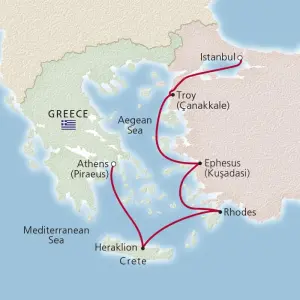
Trace the origins of civilization as you sail the Aegean Sea. Spend two days in Istanbul, a compelling blend of Eastern and Western cultures. Travel to the ruins of Troy, long steeped in myth and a UNESCO World Heritage Site. Explore historic sites in Ephesus and experience the distinct character of the islands of Rhodes and Crete. Discover the architectural legacy of ancient Athens and the city’s charming port of Piraeus during an overnight stay.
- Our expert travel advisors are some of the best in the industry - and they truly love to travel themselves! They are experienced, highly knowledgeable, and live right in your community.
- We are a not-for-profit member-service organization dedicated to helping our members explore the world!
- AAA works with a wide variety of top travel partners to offer exclusive member benefits including discounts, special inclusions, onboard spending credit and more.
Call to Book
1-800-829-5448
Included With Your Trip
- 7 nights in choice of outside veranda stateroom with understated elegance and modern Scandinavian design
- All meals onboard including regional specialties and classics
- Beer, wine & soft drinks with onboard lunch & dinner
- 24-hour specialty coffees, teas & bottled water
- 5 guided tours
- Enrichment lectures & Destination Performances
- Port taxes & fees
- Free Wi-Fi
- AAA benefit:$100 per person shipboard credit
Additional Information
Day 1 - Istanbul, Turkey
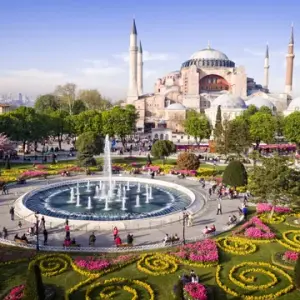
Embark your ship and settle into your stateroom. Istanbul exudes a fascinating mix of Western and Eastern cultures. Its strategic locale led to its role as a significant center of trade—eventually becoming a cultural crossroads along the world-famous Silk Road. One of the city’s stunning centerpieces is Hagia Sophia, founded as a basilica, converted to a mosque, then a museum; it is now a mosque again and features exquisite mosaics and frescoes. The city’s Grand Bazaar offers a rich taste of Turkish culture, from a vast selection of carpets and fabric to luscious dates and the local sweet favorite, Turkish Delight.
Day 2 - Istanbul, Turkey
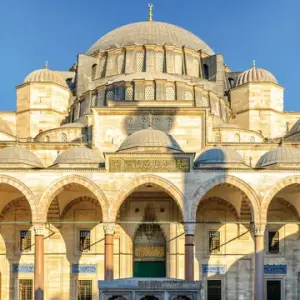
Straddling Europe and Asia across the Bosphorus Strait, no other city in the world bridges two continents. Istanbul’s history is evident on every corner, from the cascading domes of the Blue Mosque to the courtyards of the Topkapi Palace. Visitors and locals alike flock to the European districts of Karaköy and Galata to browse shops and visit galleries, while across the strait lie the fashionable areas of Kadıköy and Moda. At night, the Old Town’s buildings illuminate the skies, and across the Sea of Marmara, twinkling lights of ships follow a trail to the Asian continent.
Day 3 - Troy (Canakkale), Turkey
Çanakkale was an object of desire dating back to the ancient Greeks. Today, the nearby ruins of Troy, once a powerhouse of Asia Minor, provide a glimpse of the region’s former glory. The remarkably preserved structures of this UNESCO World Heritage Site offer hints of life here in the days of Alexander the Great and the later Roman Emperor Augustus. But it is the fabled Trojan Horse that is most prominent here. In Homer’s Iliad, the wooden steed gave ancient Greeks entry to the city during the Trojan War, and its legend is still very much alive today.
Day 4 - Ephesus (Kusadasi), Turkey
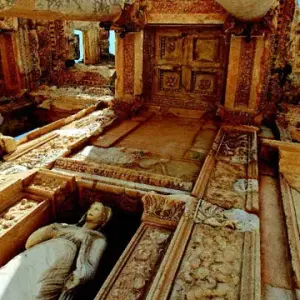
One of antiquity’s best-preserved cities, Ephesus offers an unparalleled look into the lives of the ancients. Many of its ruins have endured from the time Ephesus was one of the largest metropolises of the ancient world. Excavations reach back to the 10th century BC, when this city hosted one of the Seven Wonders of the Ancient World—the Temple of Artemis. Today, Ephesus is still full of wonders: the towering facade of the Library of Celsus, the massive amphitheater that once sat 25,000 spectators and residences adorned with frescoes.
Day 5 - Rhodes, Greece
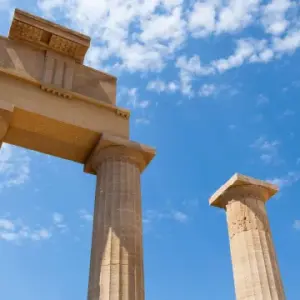
Rhodes is home to the Palace of the Grand Master of the Knights of Rhodes, a remarkable fortification. Its historic quarter is Europe’s largest active medieval town. Outside the city, forests of pine and cypress blanket mountain slopes; vineyards and groves of citrus and olives soak up the Aegean sun. The Knights of Saint John of Jerusalem conquered the island in the 14th century, bringing great wealth from the Holy Land. Under their rule, the city was reconstructed to mirror the medieval ideal. Many of the buildings from this era remain and make for rewarding strolls.
Day 6 - Crete (Heraklion), Greece
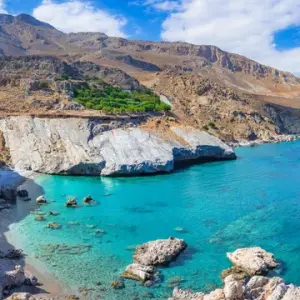
Crete was home to the Minoans, Europe’s earliest recorded civilization. Its capital, Heraklion, grew from the riches of the Venetian Empire, which ruled here for four centuries. Crete enjoyed a Renaissance building boom that helped bolster Heraklion as the region’s most strongly fortified city. The island is blessed with generous beaches, soaring mountains and coursing rivers. It is also where the distinct mantinades—couplets of love accompanied by Cretan instruments—could break out at any number of cafés where patrons sip tsikoudia, a grape-based brandy distilled in the hills.
Day 7 - Athens (Piraeus), Greece
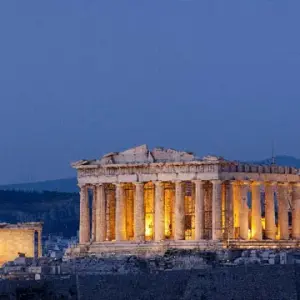
Athens has been called the “birthplace of democracy.” Its legacy looms large from atop Acropolis Hill, the pinnacle of ancient Greece. This open air museum is an astonishing repository of once-mighty structures. From its colonnaded Parthenon—built more than 2,600 years ago—revered Greek philosophers like Plato and Aristotle formulated new ideas of government and debated its role in civic life to captivated audiences. Remnants of spiritual life are also here in the several temples to Athena and Zeus.
Day 9 - Athens (Piraeus), Greece
Bid farewell to your fellow guests and journey home. Or spend more time exploring, perhaps joining one of our extensions.
Price My Trip
Product Code: AAA-Viking
*Please see vendor's brochure general information, cruise conditions and responsibility statement. Itinerary and times subject to change. Validity dates apply per product. Land only/cruise only unless otherwise specified. Wi-Fi speed may vary. Optional excursions and travel insurance not included. Restrictions, limitations and agency fees may apply. Ask your AAA Travel agent for details. Agency #178-018-521